



DJasonFleming
Movies • Books • Writing
A place for fans, friends, and supporters of author, editor, and weirdo D. Jason Fleming and his free culture entity, iktaPOP Media.
Interested? Want to learn more about the community?
Free Culture Art

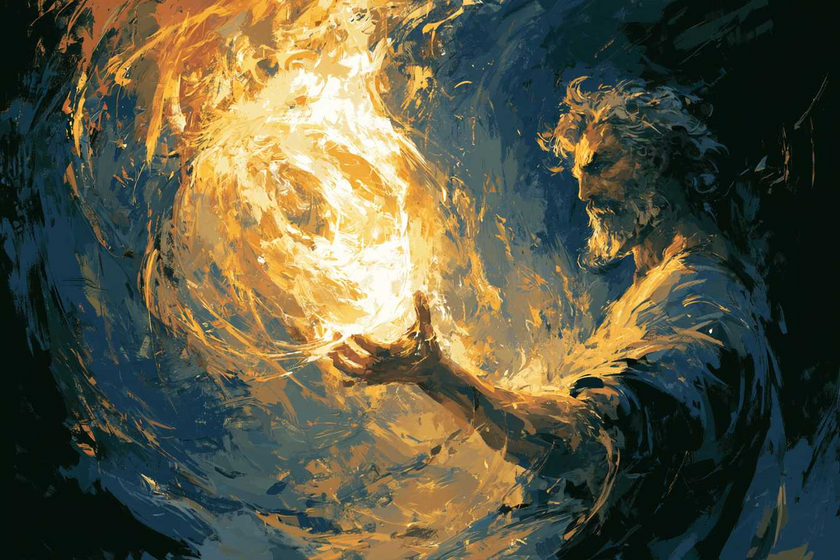
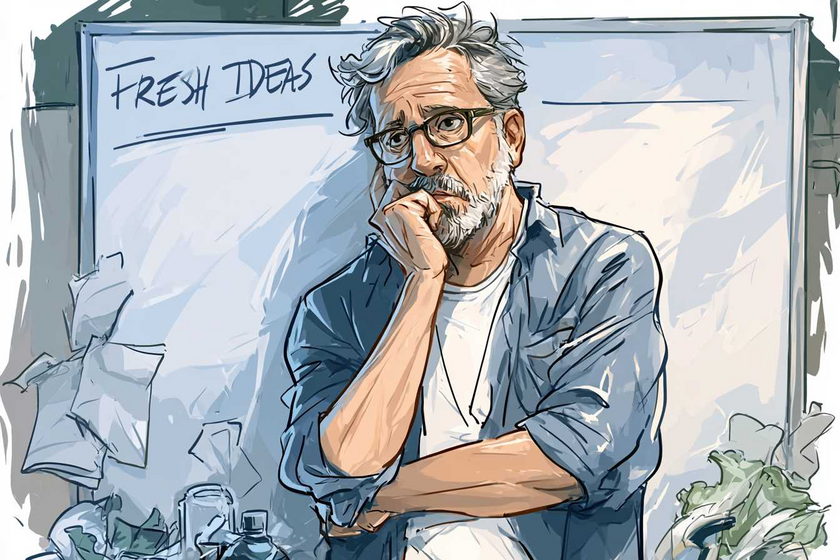
I generate a lot of AI art for potential book covers. Much of it will never get used, so I'm sharing things here that I have no plans for, under the Creative Commons Attribution-ShareAlike 4.0 (https://creativecommons.org/licenses/by-sa/4.0/ ) International License. One a day, every day, for as long as I feel like it.

(Cross-posted to Minds (https://www.minds.com/newsfeed/1591570775834365956 ).)

post photo preview
Interested? Want to learn more about the community?
What else you may like…
Posts
Articles
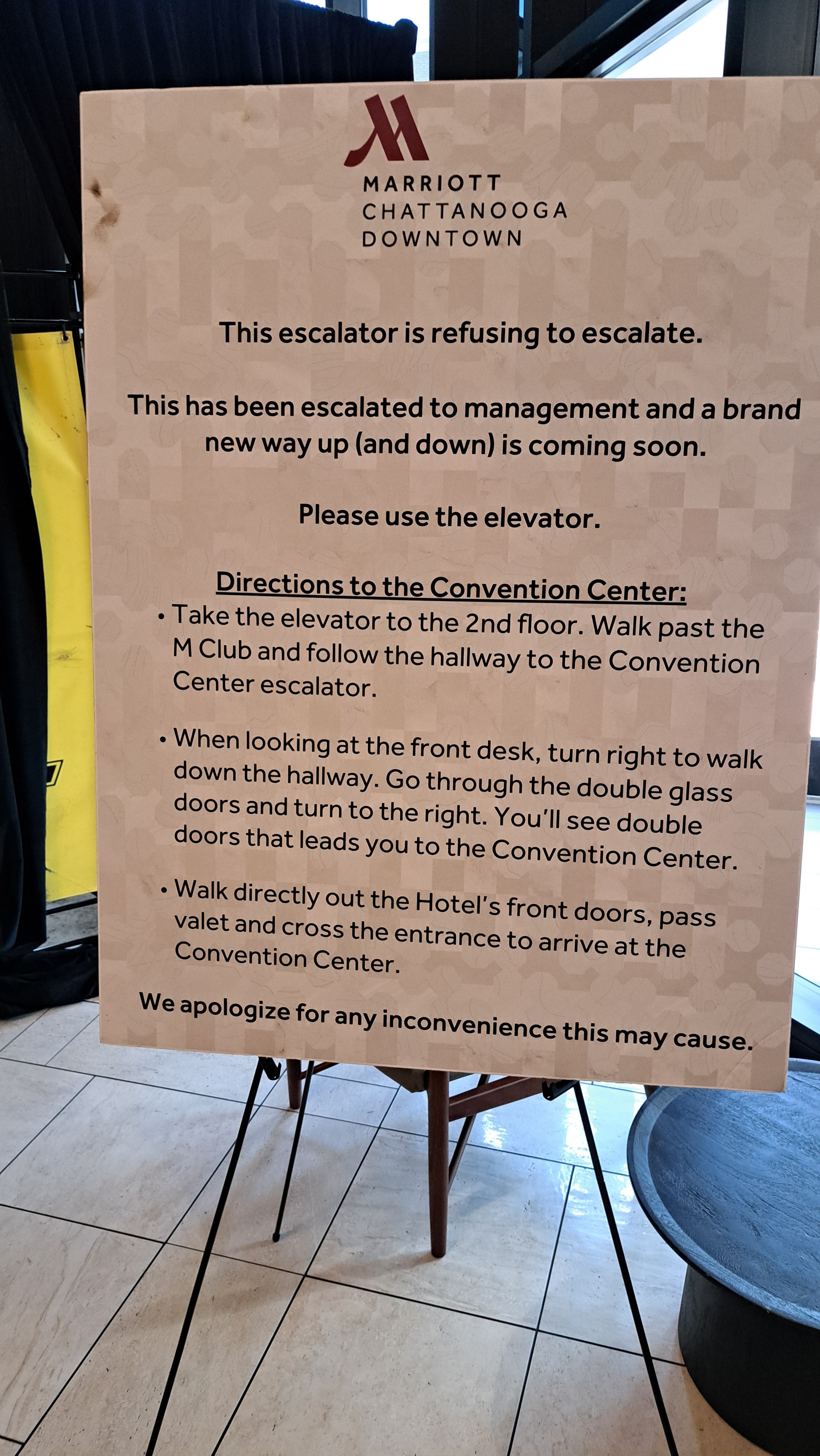
Well, this is going to make the con a bit "interesting"...
post photo preview
Inspiration

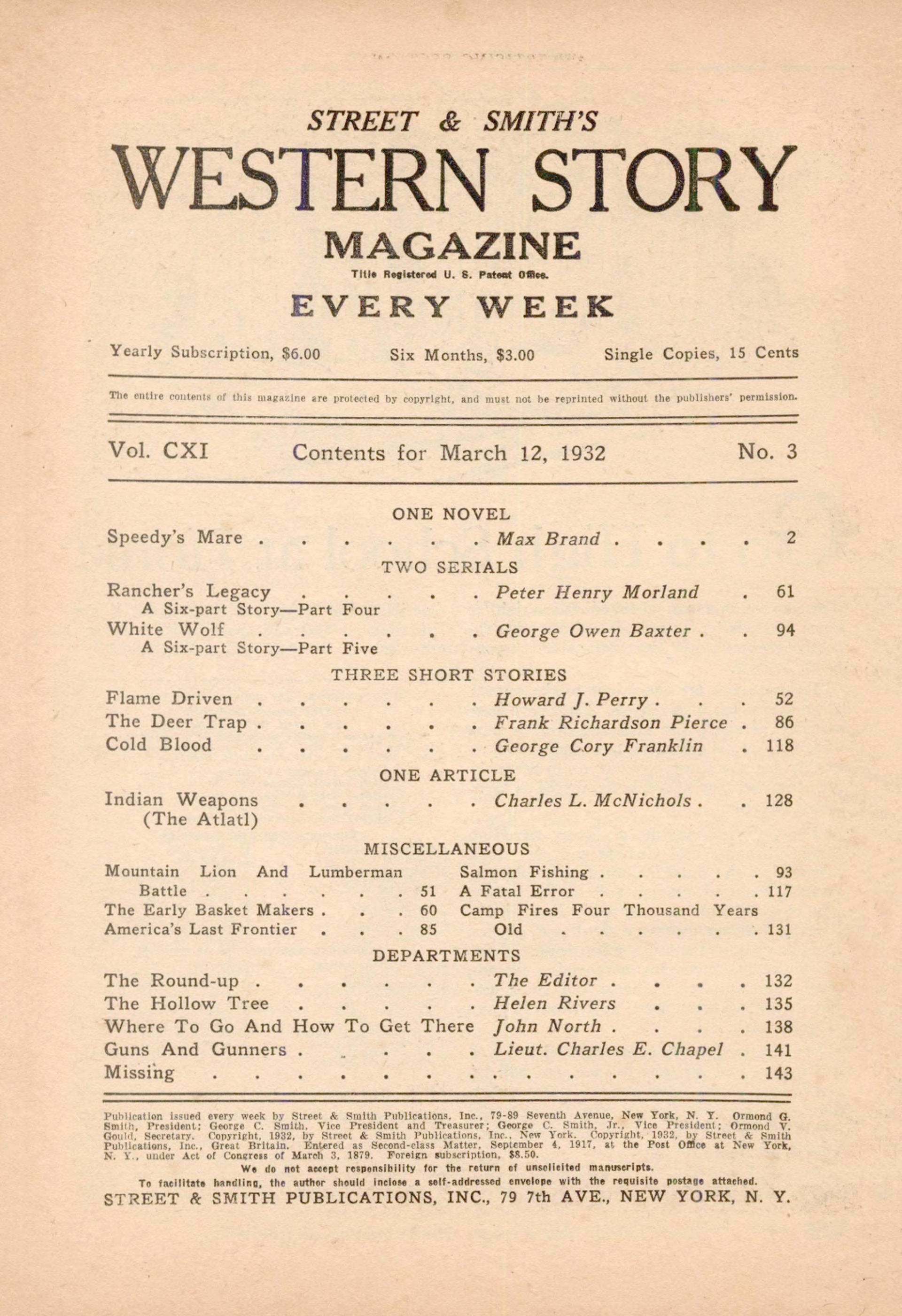
Here is the Table of Contents for an issue of Western Story Weekly from 1932.

Can you see what's funny and inspiring about it?

No?

The first three authors are all one author. Max Brand, Peter Henry Morland and George Owen Baxter were (just a few of the) pen names of Frederick Schiller Faust. That magnificent so-and-so was not only one of the best pulp writers, he wrote so stinking fast that he could take up more than half the issue of a weekly pulp, and do it on the regular.

post photo preview
Free Culture Art

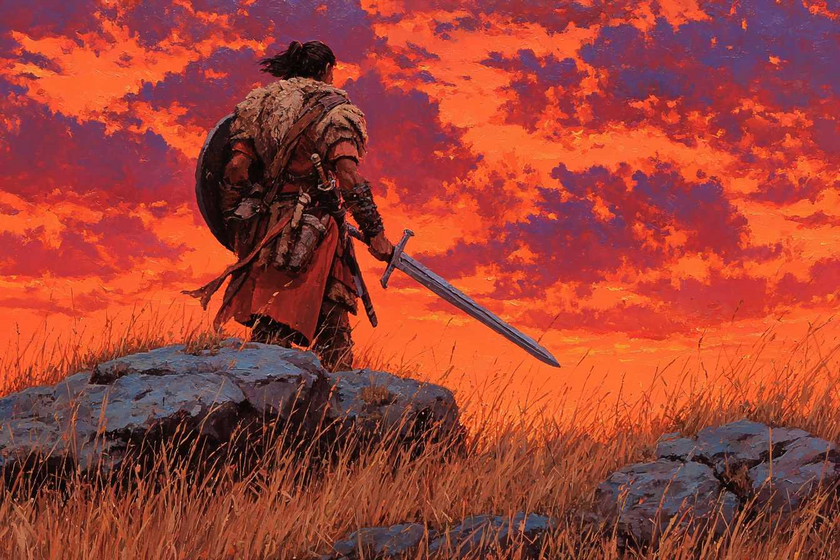
I generate a lot of AI art for potential book covers. Much of it will never get used, so I'm sharing things here that I have no plans for, under the Creative Commons Attribution-ShareAlike 4.0 (https://creativecommons.org/licenses/by-sa/4.0/ ) International License. One a day, every day, for as long as I feel like it.

(Cross-posted to Minds (https://www.minds.com/newsfeed/1591570380860952586 ).)

post photo preview
post photo preview
A Gift of Fire
In which the editor geeks out a wee bit

In the late 1990s and early 2000s, I was in my 20s, and eBooks were (mostly) not a thing. I haunted book stores and used book stores, and even then, finding novels that suited my tastes was rough, as the tides in traditional publishing were already going toward exclusion and gatekeeping.

I bought anything that looked "cool", with a decided prejudice toward 1980s paperback SF art, which is how I stumbled across K.W. Jeter, among many others. But finding freedom-oriented fiction of any kind was a real fight against the odds.

Except I had a secret ally.

I have been an online creature since 1993. And somewhere around 1995 or 1996, one way or another, I stumbled across the website for the Libertarian Futurist Society, and their lists of Prometheus Award winners and nominees.

Those lists were how I was finally able to dig into Poul Anderson, when previously I had bounced off of his books even though I was sure I should have been loving them. (Well, there was also an insight into his writing style that I began to grasp when I read Harvest of Stars and "No Truce With Kings" simultaneously, but that's a different story.) They were how I discovered the works of authors like J. Neil Schulman, Victor Milán, Victor Koman, and many, many others I might not have found on my own. They were how I found Ira Levin's best novel (and, interestingly, the only one never adapted into a film) This Perfect Day, which I rate above both Orwell and Huxley in terms of totalitarian dystopias.

Sure, there are plenty of writers who have been nominated, or won, whose writing I don't care for. But over the years, the Prometheus nominee list has been a reasonably reliable guide to finding books by people who either are not insane, or are insane in fascinating ways. (And, bit of inside baseball, it has been the only science fiction award that has reliably lead to increased sales for the winners, and this has been true for well over a decade.)

One excellent writer who won, before I ever got to know her, was Sarah A. Hoyt. My love of Darkship Thieves led, through a chain of circumstances too complicated and prolonged to lay out here, to her adopting me as her little brother, and fatefully informing me that I am a good editor. (Seriously, I had no idea.) I've now been her main structural editor for eleven years, have done indie editing on and off for something like eight years, and have been Raconteur Press's lead novel editor for as long as they've been doing novels, just over a year and a half or so.

So, yeah, this is all her fault. 

Because something happened this year that I literally never imagined.

You see, the Prometheus Award Finalists for this year were announced in April. Five books made the cut, out of a total of fourteen nominations.

And I am the editor of three (!!!) of them.

I do not know if this has ever happened before. I suspect it has, simply because of the relatively narrow list of publishers willing to take on liberty-oriented fiction for most of the lifetime of the award. But I am gobsmacked that the first year anything I am associated with got nominated for anything, three (!!!) of "my" books all got nominated for the only award I care about.

I am giddy. 

Read full Article
post photo preview
Another example of why Hollywood is dying

Several years ago, Shout! Factory acquired the rights to all of Roger Corman's catalog, including his New World Pictures library.

Shout! Studios has made use of this to remake... Deathstalker.

Before I even get to my rant, problem number one is that the actor playing Deathstalker is sixty years old, and looks at least five years older. Sure, he's in great shape, and a skilled martial artist. But in no way is he believable as a warrior-barbarian, and he's a terrible choice for a lead in what they probably intend as a series, because he's only going to get older. (Unless they follow Deathstalker tradition and recast the lead role in every sequel.)

Deathstalker has no deep lore, no canon of stories or novels to adapt, just four cheesy original films which had little or no continuity, all shot in South America on the cheap to make cash from the coattails of Conan.

The only really appealing things in the original films are a plethora of unclad or scantily-clad ladies, and a certain doofy charm. This trailer lacks either. (Given the filmography of the director, the film itself may be a different matter.)

But getting a trash knockoff IP wrong in a remake isn't what set me off about this trailer.

It's the fact that they are remaking a trash IP, instead of adapting actual sword and sorcery literature. There is a lot of it, and some very good stuff is in the public domain. Even considering what's still in copyright, getting the film rights for quite a few good books or stories would not be expensive.

Gardner Fox wrote some highly entertaining Conan pastiches in his Kothar the Barbarian series, which were paperback originals, are in ebook now, and since Fox is long dead and not at all a household name, it seems likely that buying the film rights wouldn't be terribly expensive.

Henry Kuttner's excellent Elak of Atlantis stories are all in the public domain, so they would cost nothing in terms of rights. 

C. L. Moore's Jirel of Joiry is a female sword and sorcery protagonist, and all of those stories are public domain. 

The late, lamented Tanith Lee began her career with the astonishing s&s novel The Birthgrave, and it or her other early s&s books could probably be bought for a small (by Hollywood standards) price. 

Should I mention Fritz Leiber's Fafrhd and the Gray Mouser? Never adapted to my knowledge, some of the early stories are public domain, and the ones that are not should not be expensive to acquire.

And that's what set me off. There is an enormous amount of quality material that Hollywood could be adapting. Not just in sword & sorcery, but in science fiction, fantasy, and genre fiction in general. So many masters have had little or nothing adapted, the mines are rich in ore.

But no. If it's not Philip K. Dick, Frank Herbert, or something that's been remade and ripped off to death, Hollywood won't touch it. They either want to put their own stamp on things, twisting them all out of recognizeability, or just rehash a rehash that was rehashed a dozen times already.


Read full Article
post photo preview
Classics, or Not?
Context matters in how you judge something

One way I blow off steam is watching people on Youtube react to movies. (Man, is the 21st Century weird, or what?) And one thing that has caused an itch at the back of my brain is that some people consider movies to be "classic" that... aren't.

Look, I understand that "classic" is what stands the test of time, and speaks to multiple generations, so there is a distinct possibility that I'm just a grumpy old man. Granted.

I further understand that, while I am a cinephile with a broader and deeper knowledge of the history of cinema than most people have, I also am blind to some things that are likely great. Akira Kurosawa (my vote for greatest filmmaker of all time) held that Andrei Tarkovsky was the greatest living director (before he died, obviously). I have bounced hard off of Tarkovsky's two science fiction films, though I have tried many times with each of them. I can see that there is serious intent there, skill and craftsmanship to kill for. But something about them eludes me, fails to draw me in. The fault in this case is all but certainly with me. (And watching cinephile video essays on his other movies does nothing to make me watch them, either.)

But I don't think that's operative in the examples I'm going to discuss here.

I felt when it came out, and still feel today, that Steven Spielberg's Jurassic Park is a mid-grade Spielberg movie. (Given his output of the last twenty years, you can argue it's maybe in the top one-third of his movies, to be fair. But just barely, if so.) There are things about it that are amazing. The special effects still hold up today, thirty-two years later. There are at least two sequences that rank at the very top of "this is what Spielberg can achieve when he really puts his mind to it".

But unlike, say, Jaws or Close Encounters of the Third Kind or Raiders of the Lost Ark, it is a seriously flawed movie. The story from the novel is not just simplified and condensed, it is dumbed down to the point of cartoonishness in spots.

Take Wayne Knight's disgruntled programmer character. If he announced "Hey, I'm the guy who's going to wreck the park for petty revenge" his course of action wouldn't have been any more obvious, and for the story to work, every single other character who meets him has to be too stupid to see that. (This is not Knight's fault; it's entirely on Spielberg and screenwriter David Koepp.)

Sam Neill's Alan Grant doesn't like kids. (A trait he did not have in the novel, but Spielberg will forever work his daddy issues into any story he can. And, honestly, it was not a terrible arc to give the character, on the face of it.) But his dislike of kids is so over the top and cartoonish that only Neill's performance keeps it from being a parody of such characters.

The scene that introduces Alan Grant as a paleontologist does this, too. There's a very Spielbergian sequence of shots of brushes uncovering fossilized bones, leading up to a grand reveal of a full velociraptor skeleton in stone, worthy of framing on a wall. (In interviews at the time of release, Spielberg said he felt it was important to include "the thrill of discovery" in the film.) Problem being that, well, it compresses down to a few cuts a process that would take weeks or months of painstaking work. Which the book showed by showcasing Grant uncovering a single fossilized bone carefully, painstakingly, and ensuring that it was preserved at each moment by meticulous care. Spielberg had the chops to do the scene as it was written in the book and make it just as wondrous as anything he has ever shot.

Instead, he dumbed it down.

All of this is not to say that the movie isn't entertaining: it is, wildly so. It has a great cast, some sequences that, again, rank with anything Spielberg has ever made. But as a piece of cinema and storytelling, it is so inferior to Jaws that there is no comparison. (For what it's worth, it is also inferior to the very next film Spielberg made, Schindler's List, and that's got nothing to do with subject matter and everything to do with execution.)

So, why do people view it as a classic? Put a pin in it, we'll get there.

Tombstone is a beloved movie, and there are many excellent reasons for that. First, and by far the foremost, is Val Kilmer's performance as Doc Holliday. It is one of the greatest screen performances, ever. If a movie can be a classic based on one performance, then everything else I have to say about it is pointless, because it qualifies.

And Tombstone has more going for it than just Kilmer. The entire cast is excellent, top to bottom; not one person phones it in, even if none of them can match Kilmer. (OK, I consider Dana Delany to be slightly miscast. But she doesn't do a bad job, at all.) It is also, and this is not even a close thing, the single most accurate-to-history film version of what happened in Tombstone with Wyatt Earp, Doc Holliday and the shoot out at the OK Corral.

That accuracy to history is, in a way, one of the things that keeps me from thinking it should rank as a classic. Because history is messy and doesn't follow the norms or structure of dramaturgy. And Tombstone the film suffers, partly, from a story structure that's lumpy and a bit of a mess. (I haven't read Kevin Jarre's screenplay, so I don't know if that's the source of the problem, or the rather excessive behind-the-scenes drama and problems were the cause, or some combination of both.) In a real sense, it's a credit to the film that the OK Corral shoot out isn't the climax, because what happened after is damned interesting. But it's also a pacing killer, and only somewhat redeemed by the portrayal of the end of Wyatt's and Doc's friendship.

The other thing about the movie that harms it, in my judgment, is the look of it. The costuming is accurate, possibly for the first time in an Earp movie. But the cinematography is... uneven, is the best way I can put it. There are some scenes that are perfectly shot. And there are others that are overlit and look like a (high end) television show rather than a film, to me. (Some of this might also be due to film stock, I'm not sure.) And the overlighting of some scenes (and possibly the film stock) make the costumes look wrong, somehow. It just doesn't look like a movie (some scenes excepted, as noted). Compare it to other westerns around that same time. Unforgiven, Dances With Wolves, and Lawrence Kasdan's Wyatt Earp all look like films. Tombstone, at times, looks like a TV drama, or a lower-budget comedy send-up.

(This is another issue that may well have been caused or exacerbated by the chaotic circumstances of the production. I can easily imagine that, with all the pressure that was brought to bear, the mentality of "let's light the hell out of this scene, shoot it, get it in the can and move the hell on" took hold, and that's totally understandable.)

So, before we go on, I just want to make sure I am absolutely clear: I like and enjoy both of these movies, and think that both have some greatness in them.

I just think that both are too flawed to be considered true classics.

So why are modern reaction channels finding them to be classic?

There are probably several factors contributing to it. First, anyone's first reaction to something is going to be different from their long-term opinion after they've let a piece of art stew in their minds for a while. Some movies improve with reflection and life experience, many go the other direction. But first reaction, well, it can be very strong, but it's not necessarily where you end up overall.

Second, most movie reactors claim that they are watching these movies for the first time (and I tend to believe them, at least the ones I follow), or else tell you if they've seen something before, and explain why they're revisiting it. Not having seen a lot of movies, particularly ones that came out in your lifetime that you know to be considered classics, or at least quite good, suggests a certain lack of film background. If you've only seen a few dozen movies, that's less of a baseline for comparison than if you've seen hundreds, or thousands.

But I think that the above, and other reasons, are not the main thing that's causing this.

The reason these films are getting to be seen as classics is that Hollywood has forgotten how to tell a cinematic story competently. The better-than-average-but-flawed films of the '90s look like classics when compared to the garbage that's been passing for "good" the past decade, or more.

A couple of years ago, I went off on The Marvels and lamented how good it should have been, given the story materials it already had. But it seems to hold for everything made by Hollywood in the past decade or more. 

In the early 1990s, a routine summer release that got released to lukewarm reviews and vanished in a box office season of giants showed more craft, more care for basic storytelling, than today's quarter-billion tentpole releases.

The Rocketeer (a Disney release, no less!) hit theaters in the same summer as Terminator 2: Judgment Day and City Slickers and Robin Hood: Prince of Thieves. Those movies were blockbusters, while The Rocketeer only managed to make $46 million against a $35 million budget, meaning that it lost money (the break-even point would have been around $70 million). It got mixed reviews, some very positive, a number vaguely disappointed.

Look at it today, and it's like watching a master class in filmmaking. The Red Letter Media guys did a re:View on the movie several years ago, and Mike Stoklasa quite rightly went on at length about how absolutely solid the script is. Everything paid off is set up, everything set up is paid off, and there is basically nothing extraneous in the story. No "actor's workshop" scenes, no pointless digressions, no storytelling blind alleys. Every scene serves the story.

Is it a perfect movie? Gosh, no. Due to budgetary limitations, for a movie called The Rocketeer, there is very little rocketeering in it, for starters. (Some reviewers at the time dinged it for that, and they weren't wrong.) And while it is a perfectly competent superhero origin story, nothing about it transcends that.

But it didn't have to be.

What it is, is a solid, well-made entertainment. Wouldn't it be nice if we had those again?

Because we mostly don't. And that's why I think there is an overreaction, so to speak, to movies that are good, even with greatness in them, but which fall short of great. By the standards of what's out there, now, they're like water to a man in the desert.

Read full Article
See More
Available on mobile and TV devices
google store google store app store app store
google store google store app tv store app tv store amazon store amazon store roku store roku store
Powered by Locals