DJasonFleming
Movies • Books • Writing
In Praise of the Prequels
November 17, 2023
post photo preview
© 2023 D. Jason Fleming, CC BY-SA 4.0

I started off wanting to be a screenwriter, the pursuit of which taught me story structure better than I ever could have learned otherwise. Now that I've been a structural editor to indie authors for several years, and having been a fly on the wall to how some major publishing houses operate, I have some insight into how stories can go wrong, and how they can be righted, that most people don't.

So when I say that I have never much liked the Star Wars prequels, but have always admired them, I hope that will be understood precisely.

At some point, some academic should do a study of the cultural reaction to the prequels, because having lived through it, and the shifts it took (although I was living in China by the time the third one came out, so I only saw the cultural reaction to that one at a distance), it feels like it would be a fascinating study in how "the consensus" is never particularly stable, and how eloquent individuals with visceral reactions can push the consensus one way or another.

When The Phantom Menace released, initial institutional reactions were ecstatic. Ron Howard was quoted the week before release as saying it was amazing and unlike anything ever seen on screen before. Roger Ebert gave it three and a half stars because he had never seen a spherical senate chamber before. (No, seriously.)

Once the public saw it, there was a fair bit of backlash, mostly centering on Jar Jar Binks. In truth, Jar Jar was just the most obvious and convenient target for ire over a story poorly told.

Then Attack of the Clones, which was greeted more tepidly, because it was expected to be like The Empire Strikes Back, the best of the three, and... well, now it's considered (unfairly, in my view) as the worst. But do note that Lucas scaled Jar Jar back quite a bit, and made him into a political dupe, advancing evil by trying to do good. Lucas's relationship with fandom has always been somewhat strained, but the man listened to his fans.

When Revenge of the Sith released, it was seen as the best of the three, albeit that was by that time very left-handed praise, and people wondered why it wasn't the first in the trilogy, rather than the last. But overall, the prequels were viewed as a massive mistake, and as sullying the Star Wars legacy.

So before I get to the praise, let me be clear: This backlash and disdain was, to an extent, merited. The measure of that extent is arguable, but I am not here to claim that they are objectively good movies.

They are not. Dramatically, they are mostly inert. In terms of storytelling, they are deeply flawed. The actors are largely adrift, lacking both solid scripting and a director who is good with actors. There is quite a lot to criticize in the prequels, and over the years, most or all of it has been criticized.

But for all their flaws, and I admit the flaws are legion, they still have things that current Hollywood lacks. 

To begin with, they tell a new story, rather than rehashing some previous movie beat for beat. Certainly, there are parallels throughout the trilogy to the original trilogy. But those parallels are (at least mostly) not lazy, but done with intent and purpose within the story, rather than with the intent of supplying memberberries (gods I hate that term!) for "stupid flyover people".

Secondly, the new story that the prequels told was enormously ambitious. George Lucas, whatever his faults as a screenwriter, tried to tell the story not only of the turning of one man to the dark side, but also to dramatize the fall of a republic into tyranny, in parallel. He didn't do it mindlessly, either. There are deliberate parallels to many different historical contexts, from the Roman Republic to the Dutch East India Company to the First Opium War to colonial India. These parallels are deliberate, which you can tell from many, many choices made during production, such as the architecture and costuming of Naboo, which has obvious influences from both India and China.

Is that ambition elegantly or artfully executed? In terms of storytelling, no — I would say that in terms of set design, art direction, and other ways, it is achieved pretty well — but wouldn't you prefer ambition marred by clumsiness over slick technical brilliance with no soul behind it?

Thirdly, even taking into account that Lucas listened to and responded to fans, he told the story he wanted to tell, rather than treating it as a mix and match set of "elements" that were "commercially appealing" simply to garner more box office money.

One of the simplest ways to see how superior the prequels are to the DisneyWars trilogy is simply to compare what they are about.

The Phantom Menace is about the decay of a republic beginning to come to light, and (less engagingly) of a slave boy beginning the journey to become a jedi knight.

Attack of the Clones is about the republic's decay being manipulated and exploited, and the young jedi's growing disillusionment with the supposed wisdom of his superiors.

Revenge of the Sith is about the fall of both man and republic, the moments when decisions are made that are irrevocable, and unforgivable.

The Force Awakens is about mirroring A New Hope as closely as possible, without annoying fans too much. If you squint and turn your head to one side and ignore all the other threads that have nothing to do with this, you could also say it's about how far an imperfect parent will go to support a wayward child.

The Last Jedi was about destroying the chance at telling a three part story, and also figuring out what fans wanted, and deliberately doing the opposite in every way possible. Internal to the story, there is nothing. Sure, you can point to scenes that attempt to give the movie a theme ("We're going to win this war not by fighting what we hate, but saving what we love!"), but they connect to nothing else in the story, and don't even make sense on their own terms.

Rise of Palpatine was purely about trying to salvage something from the wreckage that the second movie left behind, and fooling audiences into thinking it meant something. 

(Also, apropos of that title, any time "Rise" or "Rises" or "Rising" is used in a Hollywood title, for the past twenty-five years, it's a sign that there are serious story problems with the movie. This was obvious so long ago that the direct-to-DVD sequel to Van Wilder made fun of it, for gosh sakes! The only movie that was not a complete creative blackhole that used it was The Dark Knight Rises, and even that one, ambitious as it was, had definite problems.)

If you are curious to see how even The Phantom Menace — my vote for worst of the prequels — has a decent movie lurking within it, track down and download the fan edit of it, The Phantom Edit. Even to someone like me, who had a decades-old bad taste in his mouth about that one in particular, it's eye-opening.

But even if you don't, at least realize that the prequels had substance to them, however inartfully executed and awkward they were. They were by no means perfect, but George Lucas aimed high. Which is more than Disney ever even thought of attempting.


community logo
Join the DJasonFleming Community
To read more articles like this, sign up and join my community today
0
What else you may like…
Posts
Articles
Well, this is going to make the con a bit "interesting"...
post photo preview
Inspiration

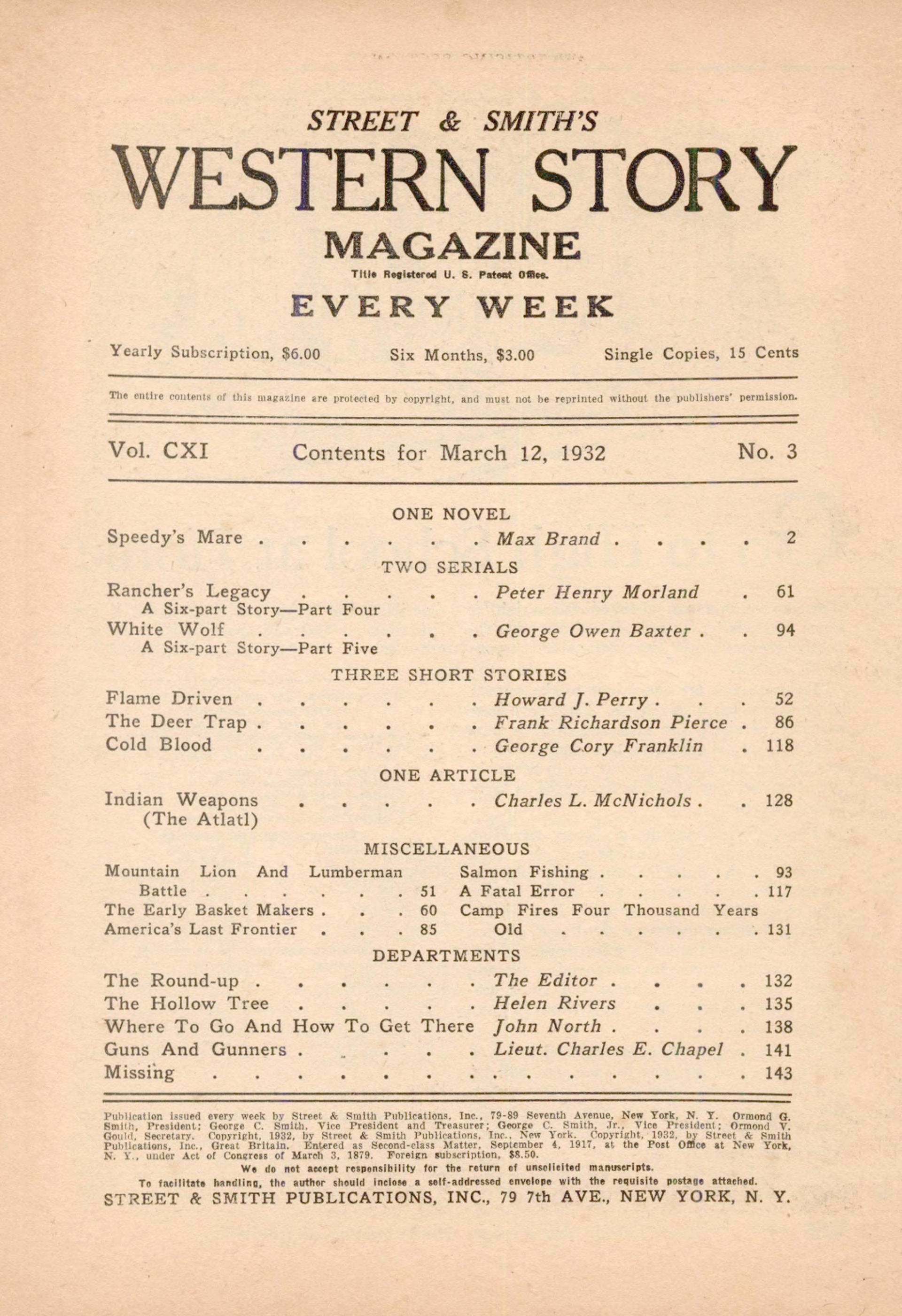
Here is the Table of Contents for an issue of Western Story Weekly from 1932.

Can you see what's funny and inspiring about it?

No?

The first three authors are all one author. Max Brand, Peter Henry Morland and George Owen Baxter were (just a few of the) pen names of Frederick Schiller Faust. That magnificent so-and-so was not only one of the best pulp writers, he wrote so stinking fast that he could take up more than half the issue of a weekly pulp, and do it on the regular.

post photo preview
Free Culture Art

I generate a lot of AI art for potential book covers. Much of it will never get used, so I'm sharing things here that I have no plans for, under the Creative Commons Attribution-ShareAlike 4.0 (https://creativecommons.org/licenses/by-sa/4.0/ ) International License. One a day, every day, for as long as I feel like it.

(Cross-posted to Minds (https://www.minds.com/newsfeed/1591570775834365956 ).)

post photo preview
post photo preview
Promises and Expectations
or: Steven Spielberg Ought To Know Better

Steven Spielberg's decline as a filmmaker has been sad to witness.

It was, perhaps, inevitable. When he was at the height of his powers, he got no respect from the "important" people, because he was commercially successful. I would have hoped that his success with Schindler's List might have satiated his craving for prestige and respect.

But ever since, his career has evinced a strange set of motivations: chasing even more prestige and respect from the elites (Amistad, Munich); experiments in craft that seem to have no genuine heart, a quality that his earliest films had more than almost anybody else's (AI: Artificial Intelligence, Warhorse, The Terminal); and movies he made for personal reasons (Saving Private Ryan, Catch Me If You Can, Bridge of Spies). 

While some of these movies are quite good, not one of them really measures up to what anyone in Generation X thinks of when they think "a Steven Spielberg movie".

(I know that Saving Private Ryan is beloved, but the film is a mess; to be sure, it is a mess with brilliance in it, especially the opening sequence of the Normandy landings, but still very much a mess.)

Now we have Disclosure Day (which I've not seen, and likely will not), and not only is it a dud, it is a clumsy dud. The title alone demonstrates the failure of the film. The title is the climax, and thus a "spoiler".

That's akin to making Jaws with only one shark attack, at the very end of the film.

If Mel Gibson had made The Passion of the Christ exactly as he did, but titled it The Resurrection, that would be the same sort of failure.

Or, in internet meme terms, it's the Surf Dracula problem in feature film form.

When you title your film Disclosure Day, you imply that the named day will happen in the first act, and the rest of the film will deal with the effects of it on whichever characters we follow. When you make that promise to the audience, but deliver instead a two and a half hour chase film that only ends with the disclosure, with no exploration of the consequences of it, you have cheated the audience and confessed that you no longer have the imagination that was once your stock in trade.

Spielberg used to understand how to set audience expectations, and how to deliver on the promises made to the audience. He was the definitive crowd-pleasing director. I think his taking to heart the disdain that the literati have for clarity and popularity poisoned his soul. Which is a shame.

Read full Article
post photo preview
A Gift of Fire
In which the editor geeks out a wee bit

In the late 1990s and early 2000s, I was in my 20s, and eBooks were (mostly) not a thing. I haunted book stores and used book stores, and even then, finding novels that suited my tastes was rough, as the tides in traditional publishing were already going toward exclusion and gatekeeping.

I bought anything that looked "cool", with a decided prejudice toward 1980s paperback SF art, which is how I stumbled across K.W. Jeter, among many others. But finding freedom-oriented fiction of any kind was a real fight against the odds.

Except I had a secret ally.

I have been an online creature since 1993. And somewhere around 1995 or 1996, one way or another, I stumbled across the website for the Libertarian Futurist Society, and their lists of Prometheus Award winners and nominees.

Those lists were how I was finally able to dig into Poul Anderson, when previously I had bounced off of his books even though I was sure I should have been loving them. (Well, there was also an insight into his writing style that I began to grasp when I read Harvest of Stars and "No Truce With Kings" simultaneously, but that's a different story.) They were how I discovered the works of authors like J. Neil Schulman, Victor Milán, Victor Koman, and many, many others I might not have found on my own. They were how I found Ira Levin's best novel (and, interestingly, the only one never adapted into a film) This Perfect Day, which I rate above both Orwell and Huxley in terms of totalitarian dystopias.

Sure, there are plenty of writers who have been nominated, or won, whose writing I don't care for. But over the years, the Prometheus nominee list has been a reasonably reliable guide to finding books by people who either are not insane, or are insane in fascinating ways. (And, bit of inside baseball, it has been the only science fiction award that has reliably lead to increased sales for the winners, and this has been true for well over a decade.)

One excellent writer who won, before I ever got to know her, was Sarah A. Hoyt. My love of Darkship Thieves led, through a chain of circumstances too complicated and prolonged to lay out here, to her adopting me as her little brother, and fatefully informing me that I am a good editor. (Seriously, I had no idea.) I've now been her main structural editor for eleven years, have done indie editing on and off for something like eight years, and have been Raconteur Press's lead novel editor for as long as they've been doing novels, just over a year and a half or so.

So, yeah, this is all her fault. 

Because something happened this year that I literally never imagined.

You see, the Prometheus Award Finalists for this year were announced in April. Five books made the cut, out of a total of fourteen nominations.

And I am the editor of three (!!!) of them.

I do not know if this has ever happened before. I suspect it has, simply because of the relatively narrow list of publishers willing to take on liberty-oriented fiction for most of the lifetime of the award. But I am gobsmacked that the first year anything I am associated with got nominated for anything, three (!!!) of "my" books all got nominated for the only award I care about.

I am giddy. 

Read full Article
post photo preview
Another example of why Hollywood is dying

Several years ago, Shout! Factory acquired the rights to all of Roger Corman's catalog, including his New World Pictures library.

Shout! Studios has made use of this to remake... Deathstalker.

Before I even get to my rant, problem number one is that the actor playing Deathstalker is sixty years old, and looks at least five years older. Sure, he's in great shape, and a skilled martial artist. But in no way is he believable as a warrior-barbarian, and he's a terrible choice for a lead in what they probably intend as a series, because he's only going to get older. (Unless they follow Deathstalker tradition and recast the lead role in every sequel.)

Deathstalker has no deep lore, no canon of stories or novels to adapt, just four cheesy original films which had little or no continuity, all shot in South America on the cheap to make cash from the coattails of Conan.

The only really appealing things in the original films are a plethora of unclad or scantily-clad ladies, and a certain doofy charm. This trailer lacks either. (Given the filmography of the director, the film itself may be a different matter.)

But getting a trash knockoff IP wrong in a remake isn't what set me off about this trailer.

It's the fact that they are remaking a trash IP, instead of adapting actual sword and sorcery literature. There is a lot of it, and some very good stuff is in the public domain. Even considering what's still in copyright, getting the film rights for quite a few good books or stories would not be expensive.

Gardner Fox wrote some highly entertaining Conan pastiches in his Kothar the Barbarian series, which were paperback originals, are in ebook now, and since Fox is long dead and not at all a household name, it seems likely that buying the film rights wouldn't be terribly expensive.

Henry Kuttner's excellent Elak of Atlantis stories are all in the public domain, so they would cost nothing in terms of rights. 

C. L. Moore's Jirel of Joiry is a female sword and sorcery protagonist, and all of those stories are public domain. 

The late, lamented Tanith Lee began her career with the astonishing s&s novel The Birthgrave, and it or her other early s&s books could probably be bought for a small (by Hollywood standards) price. 

Should I mention Fritz Leiber's Fafrhd and the Gray Mouser? Never adapted to my knowledge, some of the early stories are public domain, and the ones that are not should not be expensive to acquire.

And that's what set me off. There is an enormous amount of quality material that Hollywood could be adapting. Not just in sword & sorcery, but in science fiction, fantasy, and genre fiction in general. So many masters have had little or nothing adapted, the mines are rich in ore.

But no. If it's not Philip K. Dick, Frank Herbert, or something that's been remade and ripped off to death, Hollywood won't touch it. They either want to put their own stamp on things, twisting them all out of recognizeability, or just rehash a rehash that was rehashed a dozen times already.


Read full Article
See More
Available on mobile and TV devices
google store google store app store app store
google store google store app tv store app tv store amazon store amazon store roku store roku store
Powered by Locals